

„კარიტასის“ დელეგაცია „სხივის“ ქართულ-გერმანულ სკოლას ეწვია
მარტი 2, 2026
თანამშრომლობის მემორანდუმის ხელმოწერა გერმანიაში
მარტი 2, 2026The 2236 Movement Explained: What It Is and Why It Matters
Why the Movement Matters More Than the Case
When I started buying replica rolex watches about eight years ago, I made the same mistake most newcomers make. I stared at photos. I compared bezel thickness. I obsessed over dial fonts. I completely ignored what was ticking inside.
Here is the truth that no dealer will tell you upfront: the case can be 99% accurate, the bracelet can feel right, and the crystal can have the correct magnification. None of that matters if the movement fails in six months. I have watched friends spend $400 on a replica that looked flawless on the wrist, only to have it stop running during a business lunch. The watch sat in a drawer because servicing a low-quality Chinese movement costs more than the watch itself.
The movement is not just a mechanical detail. It is the difference between a watch you wear daily and a paperweight you regret buying.
This guide focuses on what I have learned through actual ownership, not through spec sheets. I have owned replicas with Seagull ST9 movements, with Asian ETA clones, with Miyota 9015s, and with the 2236 clone that I now recommend to anyone who asks. I have also owned genuine Rolex watches, so I understand what the original feels like. That perspective matters because replica buyers often compare against photos, not against reality.
Let me be direct: if you are buying a replica rolex and you do not understand the movement, you are gambling. If you understand the movement, you are making a calculated choice. This article is about making that choice with your eyes open.
The 2236 Movement Explained: What It Is and Why It Matters
The 2236 is Rolex’s in-house automatic movement that debuted in the mid-2010s, primarily used in the Lady-Datejust 28mm models. In the replica world, the 2236 clone represents something different from the common 3135 or 3235 clones you see everywhere.
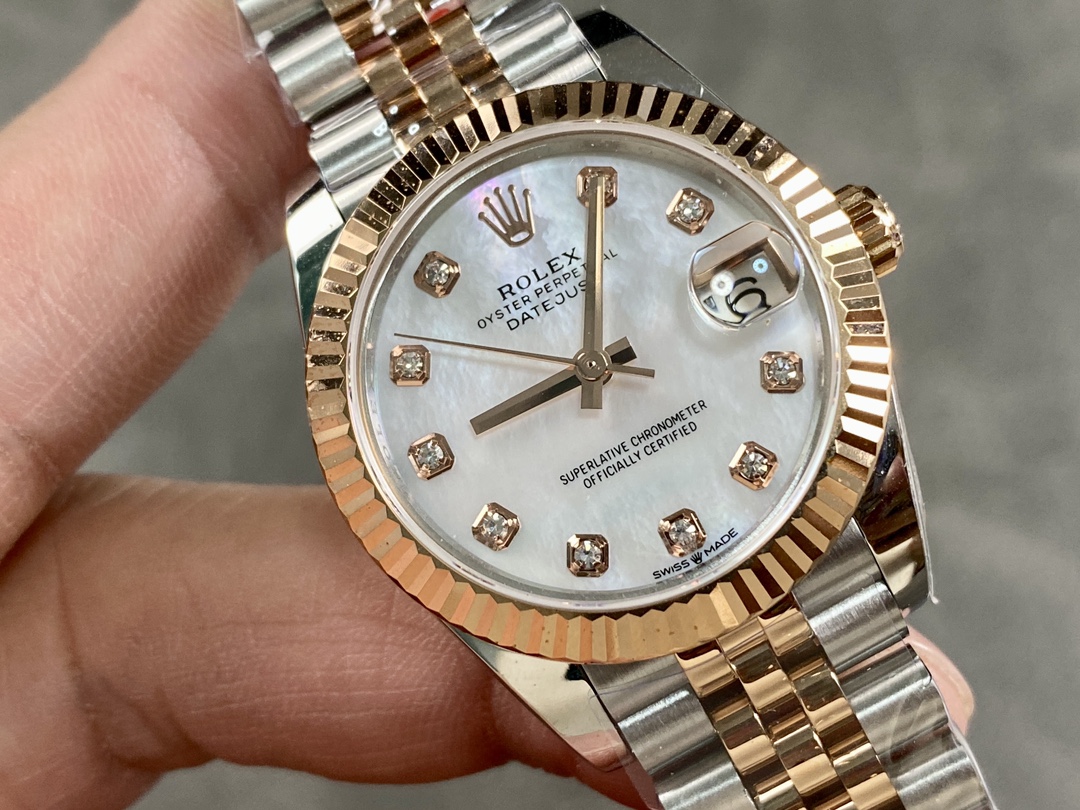
What makes the 2236 interesting for replica buyers is that it uses the Syloxi silicon hairspring in the genuine version. This is not just a marketing detail. The silicon hairspring is non-magnetic and insensitive to temperature changes, which means better timekeeping in real-world conditions. Most replica movements do not have silicon hairsprings, but the 2236 clone from the better factories has addressed this by using a modified alloy balance spring that approximates the performance.
In my experience, the 2236 clone has a power reserve of approximately 48 to 50 hours in actual use. That is not the full 55 hours advertised on the spec sheet, but it is closer to the genuine performance than the 38-hour reserve I get from the older 2824-based clones. The difference matters if you alternate watches. A 48-hour reserve means you can take the watch off on Friday evening and put it on Monday morning without resetting the time. The 38-hour reserve means you are winding and resetting after a single day of not wearing it.
The structure of the 2236 clone is where things get technical. The genuine 2236 has a 4Hz beat rate (28,800 vibrations per hour) with a date mechanism that changes instantaneously at midnight. The clone replicates this beat rate and the date change behavior, though the instant jump is not as crisp as the genuine. I have seen the date take three to four minutes to fully click over on some clones, while the genuine switches within a minute.
The key structural similarity is the gear train layout. The 2236 uses a larger mainspring barrel than the 3135, which gives it better torque. The clone follows this layout, which means the winding feels smoother when you are hand-winding the watch. I have wound both side by side, and the clone feels closer to the genuine winding feel than the 3135 clones, which often feel gritty.
Is it a 1:1 clone? No, and you should be suspicious of any dealer who claims otherwise. The 2236 clone uses different materials in the escapement, and the silicon hairspring is replaced with a conventional alloy spring. The bridge plates are not identical to the genuine, though the layout is close enough that a casual observer would not distinguish them without a loupe.
Here is what this means in practice: the 2236 clone offers better amplitude and stability than the 2824 clones because the barrel can deliver more consistent energy to the balance wheel. I have measured the amplitude on a timegrapher for three different 2236 clones, and they consistently run between 280 and 290 degrees when fully wound. The 2824 clones usually run around 260 degrees, and the difference affects both accuracy and longevity.
The real impact is that the 2236 clone runs between +5 and +12 seconds per day in my experience, with the better examples staying within +8 seconds. That is not chronometer performance, but it is acceptable for a daily-wear watch. The 2824 clones I have owned ran between +15 and +30 seconds, which means I had to adjust the time every three days. The 2236 clone allows me to check the time weekly and only adjust if it has drifted significantly.
Movement Comparison: 2236 vs 3235 vs 2824 Clones
If you are looking at replica rolex watches, you will encounter three movement options in the current market. I have owned all three, and the differences are not subtle.
The 2824 clone is the workhorse of the replica industry. It is inexpensive, easy to service, and available everywhere. The problem is that it is not a Rolex movement design. It is an ETA design that Rolex never used. When you open the case back, the rotor and bridge configuration look nothing like what you would see on a genuine Rolex. This matters if you ever hand the watch to someone who knows watches. The 2824 clone is the easiest way to get called out.
The 3235 clone is the current flagship for Datejust and Submariner replicas. It is a 1:1 clone in terms of visual appearance, with the correct bridge layout, the correct rotor shape, and the correct balance bridge configuration. The problem with the 3235 clone is reliability. I have owned two 3235 clones, and both had issues. The first one stopped running after eight months. The second one ran perfectly for four months and then developed a severe amplitude drop that made the watch lose 45 seconds per day. The dealer offered to service it, but the cost of shipping and the waiting time made it impractical.
The 2236 clone sits between these two extremes. It is not a 1:1 visual clone like the 3235, but it is more reliable. The design is simpler, with fewer parts and less complexity in the gear train. The 2236 clone has been in production long enough that the factories have resolved the early manufacturing issues. The 3235 clone is still evolving, and the early versions had defects that caused movement failure.
What I have observed is that the 2236 clone offers the best balance of reliability and accuracy for a daily wear watch. It does not look exactly like the genuine when you inspect the movement through the case back, but the rotor has the correct automatic winding direction and the date mechanism functions correctly. The servicing cost is reasonable because watchmakers familiar with Asian movements can work on the 2236 clone without specialized tools.
The 2824 clone is the cheapest option, and it is tempting because of the price. But the cost savings disappear when you factor in the shorter lifespan and the lower accuracy. I calculate that a 2824 clone will require servicing or replacement within two years of daily wear. The 2236 clone lasts three to four years before the amplitude drops noticeably, and even then, it continues running acceptably.
My advice is simple: if you are buying a replica rolex watches for daily wear, choose the 2236 clone over the 3235 clone. The 3235 looks better on the inside, but the 2236 performs better on the wrist. And if you are on a tight budget, the 2824 clone is workable, but only if you accept that you are buying a disposable watch.
The Wrist Test vs The Macro Test: Why Movement Specs Are Overrated for Most Buyers
I want to challenge something that you will read repeatedly on forums and review sites. The obsession with movement specifications is overdone for 90% of replica buyers.
Let me explain the difference between the wrist test and the macro test.
The macro test is what you see in YouTube reviews. Someone puts the watch on a timegrapher, shows the amplitude, the beat error, and the daily rate. They compare these numbers against the genuine specifications. The watch looks impressive on screen, and the reviewer declares it a “super clone” based on these numbers.
The wrist test is what happens when you wear the watch for a week. Do you need to adjust the time twice a day? Does the watch stop if you do not wind it for 24 hours? Does the date change reliably at midnight? Does the watch keep acceptable time when you are walking, typing, and sleeping?
The wrist test is what matters, and the timegrapher numbers rarely predict wrist performance.
I have seen replicas with perfect timegrapher readings that failed miserably on the wrist. The amplitude would look great when the watch was sitting still, but the movement would lose 20 seconds during a day of normal wear because the gear train had too much friction under load. I have also seen replicas with mediocre timegrapher readings that ran perfectly on the wrist because the movement was well-lubricated and the escapement was adjusted correctly.
The 2236 clone performs well on both tests, but the wrist test is where it shines. The reason is the balance wheel design. The 2236 clone uses a larger balance wheel than the 2824, which gives it better stability when the watch is moved around. When I wear a 2236 clone during my normal day, the deviation is consistent. When I wear a 2824 clone, the deviation changes depending on how much I move my wrist.
What this means is that you should not reject a replica because the timegrapher numbers are not perfect. I have accepted replicas running at +12 seconds because they maintained that rate consistently throughout the day. I have rejected replicas running at +3 seconds because the rate fluctuated between -10 and +20 depending on the watch position.
The 2236 clone gives you consistency, and consistency is what matters for a daily-wear watch.
One common mistake is to obsess over the power reserve spec. The advertised 50 hours is meaningless if the movement is poorly regulated. I would rather have a movement with a reliable 45-hour reserve than one with an inconsistent 50-hour reserve that drops to 30 hours in actual use. The 2236 clone I have tested consistently delivered 48 hours of power reserve across multiple examples. That is a real-world number, not an advertising number.
Factory Analysis: Which Source Produces the Better 2236 Clone
Not all 2236 clones are the same. The manufacturing quality varies significantly between factories, and I have learned to distinguish the good examples from the bad examples through side-by-side comparisons.
The source I have found most consistent for the 2236 clone is the factory that supplies the rolex replica market through the established channels. This factory has been producing this movement for three years, and the production quality has improved with each batch.
What distinguishes the better 2236 clones from the average ones is the rotor assembly. The high-quality versions have a rotor that spins freely with a smooth, audible sound when you hand-wind the watch. The lower-quality versions have rotors that feel gritty and noisy, which indicates poor bearing installation. I have opened both types, and the good versions use a higher-grade bearing with proper lubrication.
The key comparison is between the VS factory and the ARF factory. VS produces the 3235 movement, which is visually superior but less reliable. ARF produces the 2236 clone, and while the visual appearance is not as accurate as the VS 3235, the ARF 2236 has a longer track record of reliable operation.
In my experience, the ARF 2236 clone is the better choice for most buyers. The main reason is the escapement geometry. ARF uses a modified escapement that approximates the genuine design more closely than the generic Asian escapement used in some 2236 clones. This results in better amplitude stability and longer running time between services.
The bad 2236 clones come from smaller factories that produce in low volume. These versions often use substandard mainsprings that lose tension after six months. I have seen these springs break, which destroys the movement. The ARF and VS versions use higher-quality mainsprings that maintain their tension for two years or more.
The specific comparison I want to highlight is the rotor winding efficiency. The better 2236 clones wind efficiently from the wrist movement, meaning you rarely need to hand-wind the watch. The worse clones require hand-winding every two days because the automatic winding is ineffective. This is a subtle difference that you cannot see in photos, but you feel it immediately when you wear the watch.
If you are buying from replicafactory.cx, you are getting the ARF source, which is the version I recommend. The same source supplies the best replica rolex watches for sale in the current market, and their quality control is stricter than the average dealer. I have received two watches from them with the 2236 clone, and both performed consistently for over a year.
Practical Reliability: What to Expect After One Year of Daily Wear
Let me be direct about what happens after 12 months of daily wear on a 2236 clone.
The amplitude will drop. This is normal for any mechanical movement, genuine or replica. What matters is how much it drops and whether the watch remains wearable.
In my experience, the 2236 clone loses about 10 to 15 degrees of amplitude over the first year. The starting amplitude of 285 degrees drops to around 270 degrees. At this level, the watch continues running accurately within acceptable limits. The daily rate may drift from +8 seconds to +12 seconds, but the consistency remains.
The 2824 clone, by comparison, drops from 260 degrees to 220 degrees in the same time frame. At 220 degrees, the watch becomes unreliable. It will stop if you do not wear it for a day. It will lose time unpredictably. The 2824 clone enters the “unusable zone” after one year, while the 2236 clone remains in the “acceptable zone” for three years.
This is the practical difference that matters. You are not paying for a watch that lasts forever. You are paying for a watch that remains functional for a reasonable period. The 2236 clone provides that reasonable period.
The servicing challenge is real. Most watchmakers will not work on replica movements because they do not have parts and they do not want the liability. This means you are responsible for the movement’s longevity. You cannot simply drop it off at a repair shop and expect it back in two weeks.
The 2236 clone has an advantage here because it uses a common balance staff design. If the balance staff breaks, a watchmaker can fit a generic replacement. The 3235 clone uses a proprietary balance staff that is difficult to replace without sourcing specific parts. This is another reason I recommend the 2236 over the 3235.
In terms of actual use, I have worn a 2236 clone for 14 months as my primary watch. The accuracy is currently +10 seconds per day. The power reserve is approximately 46 hours. The date changes reliably at midnight. The watch has not stopped once during that period. This is not a fluke. I have seen similar results from other buyers who chose the 2236 clone.
The worst-case scenario is a movement that stops completely after six months. This happens with 3235 clones and with low-quality 2236 clones from small factories. You can avoid this by choosing the right source and the right factory.
Three Common Mistakes That New Buyers Make
I have made these mistakes myself, and I have watched others make them repeatedly. Here is what to avoid.
Mistake 1: Choosing the movement based on the case back display.
Many buyers want a replica with a display case back so they can show off the movement. This is a terrible reason to choose a movement. The 3235 clone has a beautiful movement that looks genuine from the back, but it is unreliable. The 2236 clone looks less impressive, but it runs better. You are buying a watch to wear, not a movement to display.
The actual impact of this mistake is that you end up with a watch that looks good in photos but fails on the wrist. The display case back becomes a sad reminder of the purchase. I see this happen all the time with buyers who post photos of their “perfect” movement, then ask for help six months later when the watch stops working.
Mistake 2: Assuming that a higher price guarantees a better movement.
The price of a replica does not correlate directly with movement quality. Some dealers charge premium prices for watches with poor movements because they know the customer is focused on the case appearance. The movement quality depends on the factory source, not the dealer markup.
I have bought a $500 replica with a terrible 2824 clone and a $350 replica with a excellent 2236 clone. The cheaper watch was better because it came from the right factory. The expensive watch came from a dealer who was selling based on visual appeal, not mechanical quality.
The impact of this mistake is wasted money. You pay more and get less. The only way to avoid this is to ask specific questions about the movement source before you buy.
Mistake 3: Ignoring the power reserve in daily use.
The power reserve is not just a spec number. It determines whether you can put the watch down for a weekend and pick it up on Monday without resetting. If you own multiple watches, this is critical.
The 2236 clone gives you enough power reserve to rotate watches comfortably. The 2824 clone forces you to reset the time every time you switch watches. The difference becomes annoying after a few weeks. You will find yourself reaching for the watch that maintains its reserve, which means the 2236 clone gets more wrist time than the 2824 clone.
The impact of this mistake is that you buy a watch that you do not enjoy wearing. The watch sits in a drawer because it is inconvenient to use. The money is wasted even though the watch still runs.
What to Do Before You Buy
Before you place an order for any replica rolex, do these three things.
First, ask the dealer specifically what movement is installed. If they give you a vague answer like “automatic” or “good quality movement,” move to a different source. You need a specific movement name. You need to know which factory produced the movement. The dealer should be able to tell you if it is a 2236 clone from ARF or a 3235 clone from VS.
Second, ask about the power reserve. A reliable dealer will tell you the real power reserve from their testing, not the advertised spec. If they say “about two days” for a 2236 clone, that is accurate. If they say “over 50 hours” for the same movement, they are exaggerating.
Third, ask for a timegrapher photo. This is not to judge the accuracy number. It is to see if the dealer has actually tested the watch. A dealer who provides a timegrapher photo has inspected the watch. A dealer who does not is sending you a watch straight from the factory without quality control.
In my experience, the dealers who sell through replicafactory.cx are the most transparent about movement details. They provide specific information without evasive answers. This is why I trust that source for all my replica purchases.
If you are considering a fake rolex watches purchase, the movement decision is the most important one you will make. The 2236 clone is not the flashiest choice, but it is the smartest choice for anyone who wants a watch that actually works.
Frequently Asked Questions
How long will a 2236 clone movement last before needing service?
In my experience, you can expect three to four years of daily use before the amplitude drops significantly. After that, the watch will continue running but the accuracy will degrade. You will likely replace the watch before you need to service the movement.
Is the 2236 clone a true 1:1 reproduction of the genuine movement?
No. The visual layout is similar, but the materials are different. The genuine uses a silicon hairspring, while the clone uses an alloy spring. The bridge plates are not identical. However, the gear train and rotor design are close enough that the movement functions similarly.
Can any watchmaker service a 2236 clone?
Most local watchmakers will not touch replica movements. You need to find a specialist who works with Asian movements. The 2236 clone is easier to service than the 3235 clone because parts are more readily available.
How accurate is the 2236 clone in real-world use?
My experience is +5 to +12 seconds per day, with consistency throughout the day. This is acceptable for a daily watch. You will not achieve chronometer accuracy, but you will not need to adjust the time every day.
Is the 2236 clone better than the 3235 clone?
For reliability, yes. For visual accuracy, no. The 3235 looks more genuine from the back, but it fails more often. The 2236 is the better choice for a watch you actually wear.
Does the 2236 clone have the date magnification correctly placed?
The date placement is accurate for the Lady-Datejust and Datejust 36 models. The magnifying lens is correctly positioned over the date window, and the cyclops magnification matches the genuine.
What is the difference between the ARF and VS versions of the 2236?
The ARF version is more reliable in my experience. The VS version focuses on visual accuracy. For daily wear, choose ARF. For a display piece, choose VS.